 Lydiony Garden
16 July 2026
Late Season Tomato Care
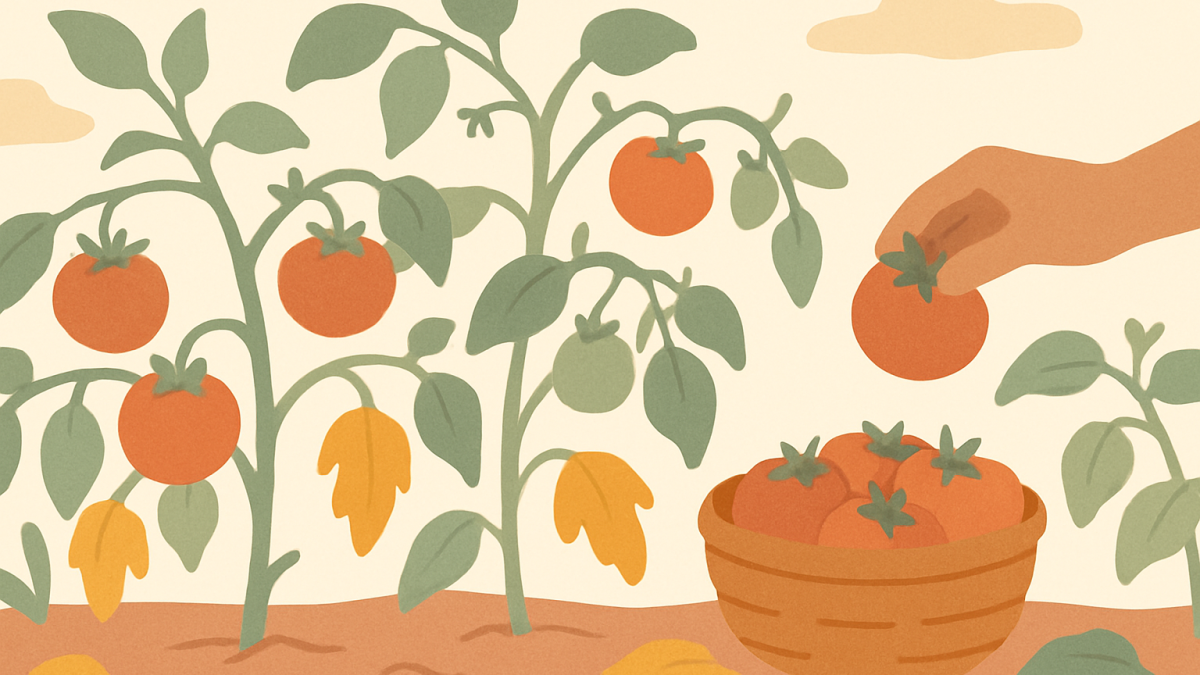
By late summer and into autumn, Melbourne tomato plants have usually been fruiting hard for months — and late season tomato care is what determines whether you get a strong final flush of ripe fruit or watch a promising crop stall out just before the season ends. The plant's needs shift as the weather cools and days shorten, and adjusting your care accordingly makes a real difference to how much you ultimately harvest.
How Late-Season Needs Differ From Mid-Summer
Through the peak of summer, tomato care is largely about consistent water and feeding to support maximum fruit production in ideal conditions. As autumn approaches, cooler nights, shorter days, and the eventual approach of the season's first proper cold snap change what a plant needs and what's realistic to expect from it.
Adjust Your Watering
Cooler autumn weather means plants lose less moisture than they did in the height of summer, so watering needs typically ease off.
- Reduce watering frequency gradually as temperatures drop, checking soil moisture directly rather than sticking to a summer schedule.
- Continue watering deeply rather than frequently and lightly — the same principle that applies all season still holds, even as total water needs decrease.
- Avoid a sudden swing from heavy summer watering to none at all, which can stress plants right when they're trying to ripen a final flush of fruit.
Ease Off on Nitrogen, Keep Potassium Up
Late in the season, a plant's job shifts from vegetative growth to ripening what fruit it already has.
- Stop nitrogen-heavy feeding, which encourages new leafy growth at a point in the season where that growth won't have time to become productive.
- Continue a potassium-leaning feed to support ripening of existing fruit, particularly on heavier-cropping varieties still carrying a lot of green fruit.
Prune for Ripening, Not Growth
A distinct late-season pruning approach helps direct the plant's remaining energy into ripening existing fruit rather than producing more that won't have time to mature:
- Top the plant: Pinching out the growing tip of each main stem stops the plant producing new flowers and directs energy into the fruit already set.
- Remove late flowers: Any new flowers appearing from mid-autumn onward are unlikely to produce fruit that ripens before the season ends — removing them lets the plant focus entirely on what's already there.
- Selective leaf removal: Removing some leaves that are shading ripening fruit (without stripping the plant bare) can help fruit colour up faster as autumn light levels drop, though don't overdo this — leaves still feed the fruit through photosynthesis.
Watch the Forecast for Frost
Melbourne's first frost typically arrives sometime in May, though a cold snap in April isn't unusual, particularly in outer or elevated suburbs.
- Keep an eye on the extended forecast from mid-autumn onward.
- Frost cloth thrown over plants overnight can buy you extra weeks of ripening time if an early cold snap threatens before you're ready to end the season.
- Once a hard frost is genuinely imminent and can't be protected against, it's time to harvest everything remaining rather than risk losing it overnight.
Dealing With Green Tomatoes at Season's End
Every Melbourne tomato grower ends up with unripened fruit when the season turns. A few good options:
- Ripen indoors: Pick fruit showing any colour break and place on a sunny windowsill — most will ripen over one to two weeks, with only a slight difference in flavour compared with vine-ripened fruit.
- Speed it up: Placing green tomatoes in a paper bag with a ripe banana or apple traps the ethylene gas these fruits release, speeding up ripening.
- Cook with fully green fruit: Tomatoes with no colour break at all are unlikely to ripen well even indoors — these are best used in chutneys, relishes, or fried green tomato dishes rather than waiting on them to turn red.
Clean Up as You Finish
Once a plant has stopped producing anything useful, remove it promptly rather than leaving it to decline slowly in the bed:
- Spent plants can harbour pests and disease that carry over to next season if left in place.
- Don't compost diseased plant material in a standard compost pile — bin it or hot-compost it separately to avoid spreading problems forward.
- Clearing spent plants also frees the bed for a follow-up autumn or winter crop rather than sitting unused until next spring.
Learning for Next Season
Late season is also a good time to take stock: which varieties cropped well and which underperformed, which parts of the bed had the best drainage and sun, and what you'd change for next year. A few notes now — while the season's details are still fresh — make planning next spring's tomato seedlings considerably easier.
Frequently Asked Questions
Should I stop watering completely as the weather cools? No — reduce it gradually based on actual soil moisture and weather rather than cutting it off abruptly, since plants still ripening fruit need consistent (if reduced) moisture right through to the end of the season.
Is it worth topping every plant? It's most useful on vigorous indeterminate varieties still carrying a lot of unripe fruit late in the season. A plant that's already slowing down naturally may not need it.
Will green tomatoes ripened indoors taste the same as vine-ripened ones? They'll be close, though vine-ripened fruit generally has a slight edge in flavour. Fruit that shows at least some colour break before picking ripens far better indoors than fruit picked while still fully green.
Can I leave spent plants in the ground over winter? It's best not to — clearing them promptly reduces the risk of pests and disease carrying over to next season, and frees the bed for a winter crop or a season of soil-building cover crop instead.
Finish the Season Strong
A little extra attention in these final weeks — adjusted watering, sensible pruning, and a close eye on the forecast — is what turns a good tomato season into a great one, right through to the very last ripe fruit.